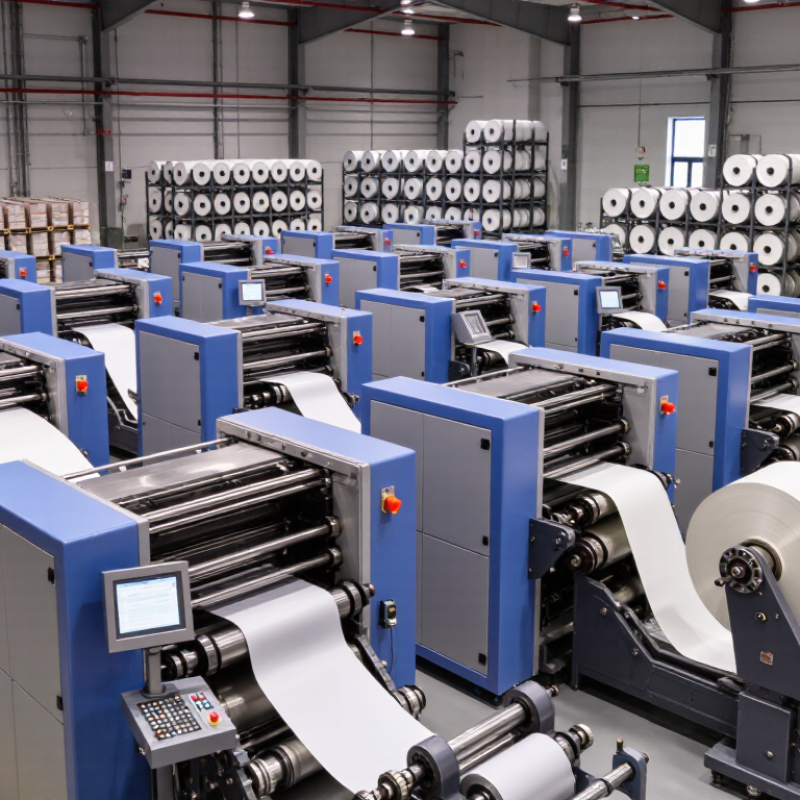
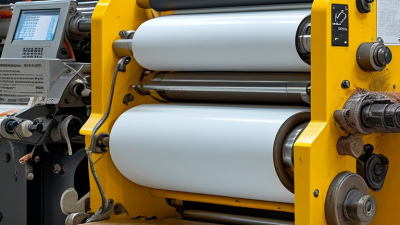
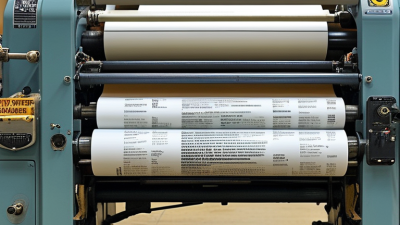
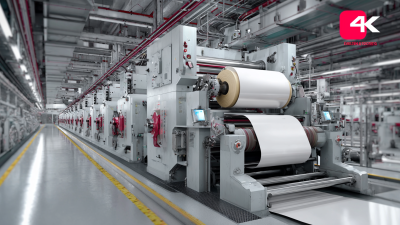
Choosing among China’s top Rotary Printing Machine manufacturers requires more than comparing catalogue prices. Buyers must examine engineering depth, machine stability, service response, and real production results. A reliable manufacturer should explain web width, printing speed, color registration, drying systems, substrate compatibility, and energy use clearly. These details matter on a busy factory floor, where ink viscosity changes, rollers heat up, and small registration errors become visible waste.
Frank Romano, a respected printing-technology educator and former RIT professor, has said, “Print is not dead; it is evolving.” His observation suits today’s Rotary Printing Machine market. Modern equipment combines mechanical precision with digital controls, remote monitoring, automated tension adjustment, and faster job changeovers. Yet automation alone does not guarantee value. Operators still need practical training, careful maintenance, and suitable process settings. A beautiful specification sheet can hide ordinary weaknesses.
This guide reviews leading Chinese manufacturers through an evidence-based lens. It considers manufacturing experience, product range, quality control, export capability, technical support, and customer feedback. Factory visits, sample testing, and verified installation records can reveal more than promotional claims. Not every supplier deserves the same confidence. Some companies offer impressive features but provide limited after-sales support. That is an uncomfortable point, but buyers should face it. The best choice depends on application, materials, production volume, budget, and local service access. Readers should also verify current certifications and performance data before signing a contract. Performance varies. Careful comparison remains essential.
Rotary Printing Machines in China: 6–12 Colors and 150–600 m/min
China’s rotary printing machine manufacturers now serve packaging, labels, paper products, and flexible materials with configurable production lines. Many current models support 6–12 colors, allowing separate stations for process inks, spot colors, coatings, or primer. A six-color press can suit repeat jobs with controlled artwork. Twelve colors offer more separation, but they also increase setup time, ink consumption, and registration checks. More stations are not automatically better.
Rated speeds commonly range from 150 to 600 m/min. Actual output depends on substrate width, ink system, drying capacity, repeat length, and operator experience. At 150–250 m/min, a converter may prioritize stable registration and lower waste. Speeds above 400 m/min require balanced cylinders, responsive tension control, and reliable web handling. Small alignment errors become visible quickly. It can happen.
When assessing a machine, buyers should request trial runs using their own film, paper, or foil. Examine color consistency, edge sharpness, drying, splice performance, and waste during acceleration. Ask for speed records under comparable materials, not only an impressive maximum figure. Service training, spare-part availability, safety guarding, and documented quality checks also matter. One practical weakness remains: advertised capacity may not match every production condition. A careful factory audit and repeatable acceptance test provide stronger evidence than a brochure.
Top Chinese Manufacturers: Product Range, Capacity, and ISO 9001 Status
China Top Rotary Printing Machine Manufacturers
Chinese rotary printing machine manufacturers cover several production needs. Their product ranges often include gravure presses, flexographic presses, narrow-web systems, and combination printing lines. Many suppliers also provide laminating, slitting, drying, and inspection equipment. This wider range helps converters build complete workflows from one source.
Production capacity differs widely. Some factories assemble compact machines for flexible packaging and labels. Larger facilities build high-speed presses with multiple color stations, automatic register control, and continuous web handling. Buyers should check monthly output, factory testing procedures, spare-parts readiness, and installation support. A large workshop does not always mean better engineering. That point deserves attention. ISO 9001 certification is another important check. Confirm the certificate number, issuing body, expiry date, and covered manufacturing scope. Certification may apply to management processes, not every machine model.
Tips: Request a recent factory video, a signed technical specification, and references using similar materials. Compare actual running speed, not only the advertised maximum. Ask for print samples on your intended film, paper, or foil. Small details matter, especially drying performance and color registration. I would also inspect service response times before placing an order. Some evaluations focus too heavily on price, then overlook commissioning delays. That is an easy mistake.
China Rotary Printing Machine Manufacturers: Product Range and Capacity Benchmark
This benchmark summarizes commonly published technical ranges for Chinese rotary printing equipment without identifying individual companies or brands. ISO 9001 certification should be verified against each manufacturer’s current certificate and scope.
Flexographic systems generally cover flexible packaging, labels, paper, and film applications, while gravure systems are widely used for high-volume packaging and decorative printing. Maximum web width and speed vary by configuration, substrate, ink system, and drying technology.
Core Specifications: ±0.1 mm Registration and 500–1,300 mm Web Width
China Top Rotary Printing Machine Manufacturers
China’s leading rotary printing machine manufacturers are increasingly judged by two practical figures:
±0.1 mm registration and
500–1,300 mm web width. In production, these specifications matter more than polished brochures. Registration accuracy keeps colors, text, and die-cut patterns aligned across long runs. A small shift can become visible on fine labels or repeating packaging graphics.
The claimed ±0.1 mm tolerance should be verified under real operating conditions. Ask for test results at different speeds, substrate tensions, and roll diameters. Servo motors, web guides, camera sensors, and stable tension control all influence registration.
A machine may perform beautifully during a short demonstration, then drift after several hours. That gap deserves attention.
Web width from 500 to 1,300 mm
offers useful flexibility. Narrow webs can reduce material waste on smaller jobs, while wider webs support multiple lanes and higher output. However, wider capacity does not automatically mean better efficiency. Operators must match the machine to film thickness, paper stiffness, ink system, and drying performance. Factory acceptance testing should record actual width, speed, waste, and registration results. Keep the data.
In my experience, maintenance access also affects reliability. Sensors collect dust. Tension rollers lose calibration. These ordinary details are easy to ignore. A dependable manufacturer should provide adjustment procedures, spare-part guidance, and clear technical records. Even then, buyers should question whether ±0.1 mm remains achievable with their own materials, because laboratory conditions rarely resemble a busy production floor.
Technology Comparison: Gravure, Flexographic, and Rotary Screen Printing
Technology choice matters more than machine size. According to Grand View Research, the global flexographic printing machine market was valued at approximately US$1.8 billion in 2023. It is projected to grow through 2030, supported by flexible packaging demand.
Gravure printing
uses engraved cylinders and delivers dense, repeatable color on long runs. It offers excellent image detail, but cylinder preparation increases cost and setup time.
Flexographic presses
use anilox rollers, photopolymer plates, and fast-drying inks. They reduce changeover time and suit films, paper, and corrugated substrates.
Smithers’ Future of Global Printing to 2028 identifies packaging as a major growth area, with global packaging print value expected to exceed US$500 billion by 2028. Registration stability still depends heavily on press control.
Rotary screen printing
applies a thicker ink layer through a cylindrical mesh. It creates strong opacity, raised effects, and tactile decoration, especially on textiles and specialty labels. However, speed and fine-image consistency may trail gravure or flexography.
Waste matters. During factory evaluations, check web tension, drying temperature, servo response, cylinder balance, and cleaning access.
Ask for production samples using your actual substrate and ink. A glossy showroom sample can mislead.
Some specifications look impressive but fail during long, humid production runs. Reports provide direction, yet real trial data should decide the purchase.
Buyer Evaluation: CE Compliance, Energy Use, Service, and 5-Year TCO
China Top Rotary Printing Machine Manufacturers
Buyer Evaluation: CE Compliance, Energy Use, Service, and 5-Year TCO
When evaluating rotary printing machine manufacturers in China, buyers should inspect evidence, not polished brochures. CE compliance starts with the correct machinery risk assessment, technical file, declaration, and traceable test records. Ask which components were tested and under what operating conditions. A CE mark alone does not prove safe integration into your line. Request manuals, wiring diagrams, guarding details, and emergency-stop validation before signing.
Energy Use
Energy use deserves a measured comparison. Record kilowatt-hours per thousand printed meters during a representative production run. Include heating, drying, compressed air, standby, and startup losses. A machine with a lower-rated motor may still consume more energy if registration is unstable. Watch the first hour. It often reveals waste hidden by showroom demonstrations. My preferred comparison uses identical substrate, ink, speed, and drying temperature. Real factories rarely behave perfectly, however; humidity and operator settings can shift results.
Service Terms and 5-Year Total Cost of Ownership
Service terms can decide the five-year total cost of ownership. Get response times, remote-support hours, technician travel fees, software access, and spare-parts availability in writing. Price likely replacements, including bearings, sensors, lamps, pumps, and control components. Add installation, training, downtime, energy, maintenance, and financing costs. Then test the model against lower output, not only full capacity. A cheap purchase can become expensive after one long stoppage. Buyers should interview existing users when permission is available. Their complaints may be more useful than a perfect reference list.