Leave Your Message
Choosing the best Rotary Printing Machine is not simply a matter of selecting the fastest model. A shiny frame can hide expensive maintenance, unstable registration, or difficult operator access. Real value appears during production, not during a factory tour.
Printing educator and industry analyst Frank Romano captures the wider purpose of the trade: “Printing is the process of taking an idea and making it real.” His idea matters here. The right machine must turn artwork into consistent, sellable output. For converters, publishers, and packaging producers, the decision begins with the material being printed. Match the machine to substrate thickness, web width, ink system, drying method, and expected production volume. Inspect sample runs closely. Look for sharp type, even ink coverage, clean edges, and steady color across the roll.
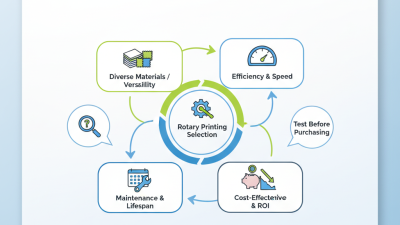
Speed claims need context. They may reflect ideal conditions, not daily production. Ask how quickly the machine reaches stable quality after a job change. Check waste levels, setup time, energy consumption, and access to replacement parts. Operator training also deserves attention. A powerful machine can become a costly obstacle when controls are confusing.
Speak with current users. Request maintenance records where possible. Reliable evidence beats polished brochures. Still, no checklist is perfect. A machine that suits one factory may fail another because workflows, staff skills, and substrates differ. This guide examines those practical details, helping buyers compare performance, service support, total ownership cost, and long-term reliability before making a confident investment.
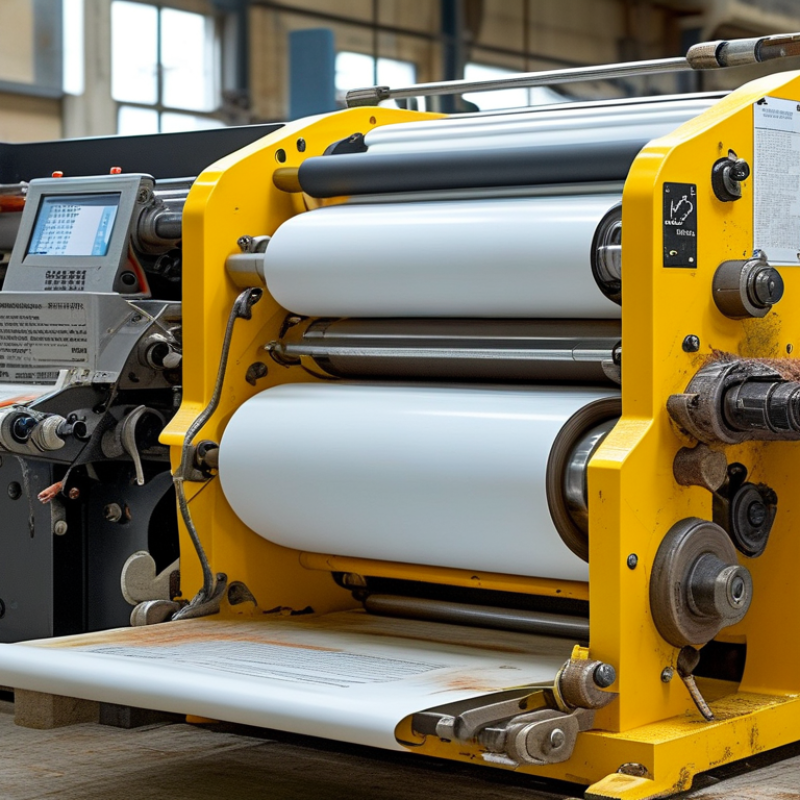
Choosing a rotary printing machine starts with identifying the printing process, not the machine’s advertised speed. Flexographic printing uses flexible plates, fast-drying inks, and anilox rollers. It suits packaging films, paper bags, labels, and corrugated materials. Smithers’ The Future of Global Printing to 2028 reports continued growth in flexible packaging, supported by demand for lightweight formats. Flexo is productive, but plate preparation can increase setup time for short runs.
Gravure uses engraved cylinders and delivers highly consistent solid areas. It is effective for long runs, decorative films, and demanding image quality. However, cylinder engraving raises preparation costs. Offset rotary printing transfers ink through a blanket, producing sharp text and smooth images on paper. It remains practical for newspapers, commercial products, and high-volume publications. The WAN-IFRA World Press Trends report shows continuing pressure on print publishers, so run length and paper waste deserve careful measurement.
Digital rotary printing removes plates and cylinders, making variable data and short runs easier. Smithers estimates the global digital print market will expand strongly through 2028, although digital equipment can carry higher ink costs. My practical advice is simple: compare total cost per saleable meter, not maximum speed. Ask about substrate tension, drying capacity, color controls, and operator training. I once underestimated drying space on a fast web line. That mistake was expensive. The best choice may be slower, especially when changeovers, waste, and maintenance are counted.
| Evaluation Dimension | Flexographic Printing | Rotogravure Printing | Web Offset Printing | Rotary Digital Printing |
|---|---|---|---|---|
| Printing principle | Relief image plate transfers ink to the substrate. | Engraved cells on a metal cylinder transfer ink to the substrate. | Ink transfers from plate to blanket and then to the substrate. | Computer-controlled inkjet or electrophotographic imaging creates variable data without plates. |
| Best production scale | Short to very long runs; especially versatile for repeated packaging jobs. | Medium to very long runs with stable, repeatable designs. | Medium to very long runs for standardized paper products. | Short to medium runs, versioned work, samples, and on-demand production. |
| Typical substrates | Paper, films, foils, corrugated board, labels, and folding cartons. | Flexible films, foil laminates, paper, labels, and decorative materials. | Coated and uncoated paper, lightweight board, and some synthetic stocks. | Coated or treated paper, synthetic sheets, labels, films, and selected packaging materials; compatibility depends on the press. |
| Typical speed range | Approximately 100–600 m/min, depending on press design, ink, substrate, and job complexity. | Approximately 150–600 m/min, with high-speed systems available for long production runs. | Approximately 300–900 m/min for modern web presses; actual speed varies by format and paper grade. | Often approximately 30–150 m/min; productivity is usually measured together with setup time and changeover efficiency. |
| Print quality | High quality with modern plates and process control; excellent for solid colors and packaging graphics. | Very high and consistent image density, smooth tonal transitions, and strong photographic reproduction. | Very high quality for text, line work, and images on suitable paper; strong color consistency after setup. | High quality with fast setup and variable imaging; quality can vary with substrate, ink system, and finishing requirements. |
| Color capability | Commonly four-color process plus spot colors, white, varnish, and specialty inks. | Commonly four-color process plus spot colors and specialty inks; suited to repeatable brand color work. | Commonly four-color process, with additional units available for spot colors and coatings. | Process-color configurations vary; some systems support extended-gamut colors, white, clear, or specialty effects. |
| Setup and changeover | Moderate; plate mounting, ink preparation, registration, and wash-up are required. | Longer and more preparation-intensive; cylinders, inks, and registration require careful setup. | Moderate to high; plate preparation, make-ready, ink settings, and web control affect setup time. | Very low physical setup; artwork can be changed digitally with minimal tooling. |
| Prepress and tooling | Requires photopolymer or elastomer plates, anilox rolls, and cylinders or sleeves. | Requires engraved cylinders, which are durable but costly and time-consuming to prepare. | Requires printing plates and plate cylinders; standardized workflows reduce repeat-job preparation. | No conventional printing plates; requires digital workflow, color management, and suitable RIP software. |
| Cost behavior | Moderate initial tooling cost; unit cost generally decreases as run length increases. | High cylinder cost, but very competitive unit cost for long runs. | Plate and make-ready costs are spread efficiently over medium and long runs. | Low setup cost and favorable economics for short runs; click or consumable costs can remain significant at high volumes. |
| Variable data and versioning | Limited; variable elements generally require additional processes or digital hybrid equipment. | Limited; fixed cylinders are best suited to repeated artwork. | Limited; variable data normally requires a separate digital or inkjet module. | Excellent; every impression can be different for personalization, serialization, and regional versions. |
| Waste and sustainability factors | Waste can be controlled with automated registration and short makeready; solvent and water-based ink choices affect environmental performance. | Long runs reduce per-unit setup waste; solvent recovery, emissions control, and cylinder production are important considerations. | Efficient for long runs, but paper waste during makeready and mineral-oil or vegetable-oil ink selection should be evaluated. | Usually minimizes setup waste and supports on-demand production; substrate treatment, ink chemistry, and recyclability must be verified. |
| Recommended applications | Flexible packaging, labels, corrugated packaging, sacks, folding cartons, and paper bags. | High-volume flexible packaging, decorative laminates, gift wrap, and specialty coated materials. | Newspapers, magazines, catalogs, commercial inserts, directories, and high-volume paper products. | Short-run packaging, labels, customized publications, prototypes, promotional materials, and variable-content work. |
| Best choice when... | You need a flexible solution for multiple substrates, packaging formats, and medium-to-long production runs. | You need exceptionally consistent quality and low unit cost for very long runs with stable artwork. | You mainly print high-volume paper products and prioritize high speed and established color reproduction. | You need fast turnaround, frequent artwork changes, variable data, or economical short and medium runs. |
Note: Speed, quality, substrate compatibility, waste, and operating cost vary according to press configuration, ink system, drying technology, substrate, finishing equipment, and job specifications. The ranges shown are general industry benchmarks rather than guaranteed machine ratings.