Top Sleeve Printing Machine Types for Global Buyers
Global packaging demand is reshaping equipment decisions. Smithers’ The Future of Global Printing to 2028 identifies packaging print as a comparatively resilient segment, supported by food, beverage, pharmaceutical, and household-product consumption. The World Packaging Organisation also reports that recyclability, material reduction, and responsible production remain major industry priorities. These pressures affect every Sleeve Printing Machine purchase, from substrate handling to ink curing and waste control.
Dr. Helmut Kipphan, author of Handbook of Print Media, offers a useful production principle: “Printing quality depends on the complete process, not on one isolated machine.” His view is especially relevant to sleeve printing. A dependable line must coordinate film tension, cylinder accuracy, registration, drying, inspection, and changeover time. A glossy label may look impressive under showroom lights, yet poor web control can create wrinkles, color shifts, or unreadable barcodes during a long production run.
This guide examines the top Sleeve Printing Machine types for global buyers, including flexographic, gravure, digital, and hybrid platforms. Each type serves different volumes, materials, artwork demands, and investment levels. Smithers and PMMI market research both indicate that converters increasingly value automation, shorter setup times, and measurable sustainability improvements. Still, reports can simplify real factory conditions. A machine that performs well in Germany may need different configuration for humid Southeast Asia or dusty inland plants. Buyers should test their actual films, inks, sleeve dimensions, and production speeds before signing a purchase order. Small details matter. Sometimes, painfully.
Shrink-Sleeve Printing Basics: PETG, PVC and OPS Films at 30–80 μm
Top Sleeve Printing Machine Types for Global Buyers
Shrink-sleeve printing depends heavily on film behavior, not only machine speed.
PETG, PVC, and OPS films commonly range from
30–80 μm. PETG offers strong shrink performance, often around
70–80%, while OPS usually delivers lower density and a crisp appearance.
PVC remains easy to process, but environmental requirements increasingly influence material selection.
A 2024 global packaging market report estimates that labels and sleeves continue growing at roughly
5% annually. The same report highlights lightweighting as a major investment priority.
For printers, thinner film reduces material use, but it also exposes tension, drying, and registration problems.
Flexographic machines suit many medium-volume jobs. Rotogravure machines can provide finer solids and stable repeatability for larger runs.
Digital systems help with short batches, although ink adhesion on treated films needs careful testing.
Tips:
Confirm film shrink curves before choosing a machine. Test 30, 40, and 50 μm samples separately.
Check corona treatment, ink compatibility, drying temperature, and tunnel behavior.
A 2023 industry efficiency survey found that setup and changeover losses can exceed
20% of available production time. That figure feels high, yet factory trials often reveal similar waste.
Operators should measure actual yield, not trust brochure speeds. Small errors become visible around curved shoulders and handles.
Rotogravure Sleeve Presses: 200–500 m/min for High-Volume Production
For global buyers, rotogravure sleeve presses offer a practical route to high-volume flexible packaging production. These systems commonly run between 200 and 500 m/min, depending on substrate, ink, cylinder design, and drying capacity. At 500 m/min, a small tension error can create wrinkles or register drift within seconds. Fast output demands disciplined process control. Operators should verify web width, material thickness, and target repeat length before approving a machine.
A well-specified press typically includes automatic tension control, stable impression settings, efficient drying zones, and inline inspection. Quick sleeve or cylinder changes can reduce downtime, but changeover savings depend on operator skill and job scheduling. Solvent-based and water-based workflows may require different airflow, temperature, and exhaust arrangements. Buyers should request test runs with their actual films, papers, inks, and coverage levels. Brochures rarely reveal how a press behaves during long runs.
In practice, maximum speed is not always the best speed. Running at 320 m/min may deliver cleaner registration, lower waste, and steadier color than forcing 500 m/min. That trade-off deserves measurement. Ask for waste data, energy consumption, maintenance access, and repeatability after several hours. A press can look impressive during a short demonstration, yet reveal uneven drying or operator fatigue later. Careful acceptance testing remains essential.
Digital Sleeve Printers: 20–100 m/min with Zero Plate Setup
Digital Sleeve Printers: 20–100 m/min with Zero Plate Setup
Digital sleeve printers are changing short and medium production runs. They typically operate between 20 and 100 m/min, depending on substrate, ink system, artwork coverage, and curing conditions. “Zero plate setup” means no flexographic plate preparation. It does not mean zero preparation. Operators still need color calibration, sleeve positioning, inspection settings, and material testing.
Smithers’ The Future of Digital Print for Packaging to 2028 estimates that digital packaging print will grow from about US$22 billion in 2023 to nearly US$37 billion by 2028. This growth reflects demand for variable designs, regional versions, and reduced inventory. A digital sleeve line can change artwork through software, rather than replacing plates. That can shorten changeovers and reduce setup waste. Small batches become more practical. Very practical.
In production trials, buyers should measure usable output, not only rated speed. A line running at 100 m/min may slow during dense images, metallic effects, or difficult films. FINAT’s industry reports continue to highlight waste reduction and process efficiency as important converter priorities. However, digital printing can require higher ink costs and careful color management. The weak point is often consistency. Buyers should request test runs using their actual film, shrink ratio, coverage, and finishing method. Records should include setup time, rejected meters, drying stability, and repeatability across shifts. Capability claims need evidence.
Top Digital Sleeve Printing Machine Types for Global Buyers
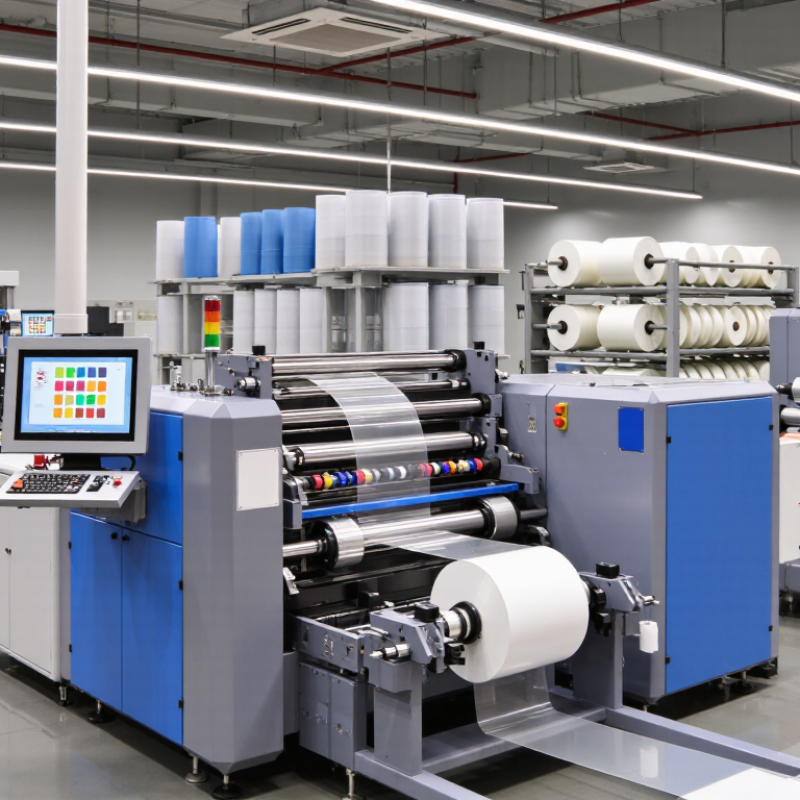
Typical digital sleeve printing speeds range from 20–100 m/min with zero plate setup.
The chart presents practical throughput ranges by production scenario. Short-run and variable-data work generally operates at lower speeds, while standardized, longer-run sleeve production can approach 100 m/min. Digital workflows eliminate plate preparation, supporting faster changeovers and economical multi-design production.
Global Buyer Metrics: Web Width, OEE, Ink Systems and ISO 12647-2
Global buyers comparing sleeve printing machines should start with web width, not brochure speed. Narrow-web systems suit labels, small batches, and frequent artwork changes. Wider machines support high-volume packaging, but setup waste can rise quickly. Measure the actual substrate range, including film, paper, and heat-sensitive materials.
OEE reveals more than rated output. Track availability, performance, and quality during ordinary production weeks. A line running at 90% speed may deliver better OEE than a faster line with repeated stoppages. I have seen operators lose hours through slow sleeve changes and cleaning routines. The data was useful, but not always complete. Downtime codes often need stricter discipline.
Ink system selection affects color stability, drying, and maintenance. Water-based inks can support lower-emission workflows, while solvent-based systems may suit demanding film applications. Curing capacity must match ink chemistry and production speed. ISO 12647-2 provides a reliable reference for process control and color consistency. Still, certification alone cannot repair poor calibration. Verify press proofs, ink density, dot gain, and substrate behavior with trained technicians. Keep records. Recheck after maintenance. A practical acceptance test should use the buyer’s real artwork, materials, and target tolerances. That exposes weaknesses hidden by showroom samples.