Leave Your Message

2026 Top Sleeve Printing Machines for Global Buyers

The 2026 market for Sleeve Printing Machine technology is becoming more demanding and less predictable. Global buyers now compare production speed, print consistency, energy use, automation, and after-sales support. A machine may promise 300 meters per minute, yet real output can fall with thicker films, complex artwork, or frequent job changes. Practical testing matters more than impressive brochures.

Printing educator and industry authority Frank Romano has said, “Print is not dead; it is just changing.” His observation fits the sleeve printing sector closely. Brands continue seeking vivid graphics, accurate registration, and flexible short-run production. Meanwhile, converters face rising labor costs, tighter quality expectations, and pressure to reduce material waste. The best Sleeve Printing Machine should therefore match the buyer’s actual workflow, not merely display the highest speed.

This guide examines leading machines for international purchasing decisions in 2026. It considers flexographic, gravure, and digital configurations, where relevant. It also reviews substrate compatibility, curing systems, color management, maintenance access, and operator training. Certification and local service support deserve equal attention. A reliable supplier should provide clear specifications, installation guidance, spare-parts planning, and measurable performance data.

No ranking is perfect.

A machine that performs well in Germany may need different settings in India, Brazil, or South Africa. Climate, power standards, ink availability, and technician access can change the buying decision. Some manufacturers also disclose limited test conditions. That weakness deserves attention. Buyers should request sample production, inspect finished sleeves, and calculate total ownership costs before signing a purchase agreement.

2026 Top Sleeve Printing Machines for Global Buyers

Sleeve Printing Machines: Definition, Structure, and Working Principles

Sleeve Printing Machines: Definition, Structure, and Working Principles

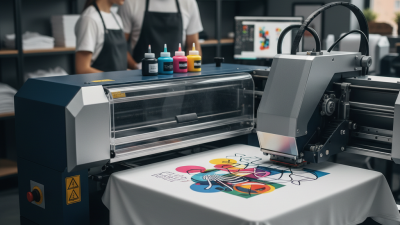
A sleeve printing machine prints graphics, text, and codes on flexible film used for shrink sleeves. It may use flexographic, gravure, or digital printing methods. The machine usually includes an unwinding unit, tension controller, printing stations, drying system, inspection camera, and rewinder. Some models also include slitting equipment. This distinction matters: printing the film is not the same as forming or applying the finished sleeve.

During operation, the unwinder feeds film at a controlled speed. Tension sensors help prevent wrinkles and stretching. Each printing station transfers ink through a plate, cylinder, or digital printhead. Registration sensors align colors and repeated designs. Drying follows every suitable stage, especially when ink layers are heavy. The inspection system checks missing text, color shifts, pinholes, and registration errors. Finally, the rewinder produces a stable roll for later converting.

In real production, the first setup is rarely perfect. A slight tension change can distort a barcode or move small lettering. Operators often adjust speed, ink volume, drying temperature, and web alignment together. Film thickness also affects shrink behavior and print accuracy. I have found that a clean machine frame improves troubleshooting more than expected. Buyers should examine service access, operator training, spare-part availability, guarding, ventilation, and documented quality checks. A fast machine is not always the most reliable choice.

Main Types of Sleeve Printing Machines for Different Production Needs

Choosing among sleeve printing machines starts with production needs, not impressive speed figures. Grand View Research valued the global printed labels market at about USD 48.8 billion in 2023, with growth expected through 2030. That expansion increases pressure on converters to balance quality, waste, and changeover time.

Flexographic sleeve printers suit long runs with stable artwork and consistent film rolls. They offer strong throughput and efficient ink coverage. Rotogravure machines fit very large volumes requiring dense colors and repeatable detail. Their cylinders, however, increase preparation costs. Digital inkjet systems support short runs, variable graphics, and fast artwork changes. They reduce plate preparation, but ink compatibility and curing require careful testing. Hybrid machines combine flexographic coating with digital imaging. They can handle mixed orders, although operators may face more complex maintenance.

Production trials should examine more than maximum speed. Measure setup waste, registration accuracy, drying performance, and usable output per shift. A five-minute changeover can matter more than a higher headline speed. FINAT’s 2024 Radar report highlights continuing converter interest in efficiency and sustainable label production. Smithers’ Future of Labels and Release Liners to 2028 also identifies digital workflows and material efficiency as important market directions. These findings support flexible equipment choices, but they do not remove practical weaknesses. A digital machine may struggle with specialty films. A high-speed flexographic line may waste too much material during short jobs. The best selection remains imperfect, and real substrate trials should challenge supplier claims.

2026 Top Sleeve Printing Machines for Global Buyers

Main Types of Sleeve Printing Machines for Different Production Needs

Typical operating speeds vary by substrate, sleeve width, ink system, print repeat, curing method, and changeover time. Flexographic and gravure machines generally suit long production runs, while digital and hybrid systems are better suited to short runs, variable data, and frequent artwork changes.

Key Performance Factors for Comparing 2026 Sleeve Printing Machines

2026 Top Sleeve Printing Machines for Global Buyers

Key Performance Factors for Comparing 2026 Sleeve Printing Machines

A reliable sleeve printing machine must hold registration during long production runs. Check color alignment after speed changes, not only during a short demonstration. A practical trial should use the intended film, ink, and artwork. Inspect the printed sleeve under bright light. Small shifts can become costly waste.

Output speed matters, but stable speed matters more. Ask for measured production data, including setup time, rejected meters, and cleaning intervals. Drying performance also deserves close attention. Inadequate curing may cause smearing, blocking, or poor adhesion during shrinking. Test different ink coverage levels. Heavy coverage can expose weaknesses quickly.

Material flexibility is another key factor for global buyers. The machine should handle common sleeve films without excessive adjustments. Confirm web tension control, splice handling, and cylinder changeover time. Automated features can reduce labor, yet they may add maintenance demands. Keep spare parts and operator training in the purchase plan. Total cost includes energy, solvents, downtime, and skilled labor.

Do not trust speed alone.

Noise, access to service areas, and control clarity affect daily productivity. A confusing interface can slow new operators and increase setup errors. Remote support may help, but local technical response remains valuable. I would also compare three real job samples, not one perfect sample. A machine can look impressive in a showroom and still disappoint under continuous production pressure. One overlooked detail can matter.

2026 Top Sleeve Printing Machines for Global Buyers - Key Performance Factors for Comparing 2026 Sleeve Printing Machines

Comparative reference for common machine configurations used for shrink sleeves, stretch sleeves, and pressure-sensitive label production. Figures are typical market ranges and should be confirmed against the final machine configuration, substrate, ink system, and local operating conditions.

Machine Category Performance Factor Typical 2026 Market Range or Capability What Global Buyers Should Compare
Digital Inkjet Sleeve Press Suitable production volume Short to medium runs; commonly selected for variable artwork, regional versions, and frequent job changes Best suited to buyers prioritizing version flexibility, reduced plate preparation, and economical short runs over maximum long-run throughput.
Print width Approximately 330–700 mm, depending on press architecture Confirm the printable width, usable web width, edge allowance, and whether the configuration supports the required sleeve lay-flat dimension.
Line speed Approximately 30–100 m/min for many label and sleeve applications Actual output is affected by ink coverage, curing requirements, white-ink use, substrate, resolution, and finishing operations.
Resolution and color control Commonly 600–1,200 dpi class output with CMYK; optional white and extended-gamut channels may be available Evaluate small-text quality, barcode grading, white opacity, color repeatability, and compatibility with brand color workflows.
Changeover profile Very low setup requirement; artwork changes are primarily software-driven A strong option where many SKUs, localized designs, test markets, or seasonal products create frequent changeovers.
Flexographic Sleeve Press Suitable production volume Medium to very long runs with consistent repeat designs Often preferred when high throughput, low unit cost at scale, and stable repeat production are more important than rapid artwork changes.
Line speed Approximately 150–600 m/min, depending on press format, ink system, substrate, and job complexity Compare rated speed with demonstrated sellable speed, including drying, registration, inspection, and splice handling.
Print repeat range Typically about 250–800 mm, depending on cylinder or sleeve system The repeat range must cover the finished sleeve layout, distortion compensation, registration marks, and any multi-up arrangement.
Ink and curing options Water-based, solvent-based, or UV/LED-UV configurations are available across different machine designs Check drying capacity, exhaust requirements, solvent recovery or emissions controls, energy use, and local regulatory compliance.
Setup and tooling Requires plates, anilox rolls or sleeves, ink preparation, and registration setup Calculate plate cost, plate life, setup labor, ink waste, and the number of repeat jobs needed to reach the cost advantage over digital printing.
Rotogravure Sleeve Press Suitable production volume Very long runs with high image consistency requirements Most competitive when the same design is produced repeatedly in large quantities and cylinder investment can be amortized over volume.
Line speed Approximately 150–500 m/min for many flexible-film applications Confirm the practical speed for the selected film, ink set, color count, drying system, and required quality standard.
Print repeat range Commonly about 300–1,000 mm, depending on cylinder diameter and press design Review cylinder availability, repeat increments, engraving lead time, storage requirements, and cylinder change procedures.
Surface quality and consistency High-density solids and consistent tonal reproduction are key strengths when the process is properly controlled Compare color control systems, cylinder specifications, ink viscosity management, drying stability, and inspection capabilities.
Narrow-Web UV Flexographic Press Typical web width Approximately 250–550 mm for common label and narrow-web configurations Check whether the machine supports the required number of lanes, sleeve width, waste matrix, and inline finishing modules.
Line speed Approximately 100–200 m/min, with the actual rate determined by print and finishing requirements Compare speed while printing, varnishing, die-cutting, laminating, and inspecting—not only the mechanical maximum speed.
Inline finishing May include coating, cold foil, lamination, rotary die-cutting, slitting, and inspection Inline modules can reduce handling and waste, but they add capital cost, setup complexity, and maintenance requirements.
Curing requirement UV or LED-UV curing is commonly used; LED-UV generally operates at lower substrate heat than conventional UV Compare lamp life, power consumption, cooling, ozone or exhaust needs, ink compatibility, and curing performance at production speed.
Gravure or Flexographic Shrink-Sleeve Line Sleeve material compatibility Commonly processed films include PETG, PVC, OPS, and other specialty shrink films, subject to ink and machine specifications Confirm film shrink behavior, gauge range, surface treatment, coefficient of friction, and compatibility with downstream seaming and shrinking.
Web tension control Closed-loop tension control is important for thin, heat-sensitive, and dimensionally unstable films Compare load-cell accuracy, dancer or servo control, unwind and rewind performance, and tension stability during acceleration and deceleration.
Registration accuracy Modern systems commonly use automatic register control with low-millimeter or sub-millimeter correction capability, depending on conditions Request measured production samples and verify registration across the full roll, not only during steady-state running.
Drying and heat management Drying capacity must be matched to ink type, solvent or water load, color coverage, and film temperature limits Insufficient drying can cause blocking, odor, migration concerns, poor rewinding, and downstream seaming problems.
Downstream requirements May require slitting, seaming, inspection, perforation, and roll handling equipment Compare the complete line rather than the printing unit alone; overall sleeve quality depends heavily on finishing and inspection.
Common Cross-Category Criteria Substrate thickness Many label and sleeve applications use films roughly in the 30–100 micrometre range, but the usable range is machine-specific Verify the minimum and maximum gauge, web stability, edge guidance, splice handling, and approved substrate list.
Waste performance Waste varies widely by setup method, web width, job length, registration stability, and inspection standards Ask for setup waste, roll-end waste, splice waste, and reject rates using a representative sleeve job—not a theoretical minimum.
Automation and inspection Available functions may include automatic register control, defect detection, camera inspection, viscosity control, and job recall Prioritize features that reduce operator dependency and provide traceable quality records for regulated or export markets.
Energy and environmental profile Energy demand depends on press speed, drying technology, ink system, web width, and auxiliary equipment Compare connected load, average operating consumption, compressed-air demand, exhaust volume, solvent handling, and recyclable or low-impact ink options.
Service and ownership Total cost includes installation, training, consumables, tooling, spare parts, software, maintenance, and downtime For global buyers, evaluate remote support, local service coverage, spare-parts lead times, operator training, electrical standards, and documentation.
Note: The ranges above are general industry reference values rather than guaranteed specifications for a particular machine. Final selection should be based on tested samples, approved substrates, production-speed trials, total cost of ownership, and compliance requirements in the target country.

Top Sleeve Printing Machine Options for Global Buyers

Top Sleeve Printing Machine Options for Global Buyers

Global buyers need sleeve printing machines that match their materials, volumes, and production conditions. Flexographic systems suit long runs and consistent color output. Digital machines offer faster job changes and useful customization for shorter runs. Rotogravure equipment can deliver strong image detail, but it usually requires higher investment and careful cylinder preparation. A factory trial often reveals more than a sales brochure.

Check substrate compatibility before comparing machine speed. Shrink film, PET, and specialty laminates may need different tension controls and drying settings. Ask for measurable data, including registration accuracy, waste percentage, curing performance, and average changeover time. Electrical standards, operator training, spare-part access, and remote technical support also matter for overseas plants. These details can prevent expensive delays. Still, specifications are not everything. A machine may perform well in testing but struggle with local humidity, limited floor space, or inconsistent material quality.

Tips: Request printed samples using your actual film and ink system. Confirm the complete line layout, not only the printer. Review maintenance access around rollers, dryers, and inspection units. Leave room for improvement; early purchasing decisions are sometimes too optimistic. A slightly slower machine with stable output may be more valuable than a faster model requiring constant adjustment. Calibration records and documented acceptance tests can support more reliable purchasing decisions.

Purchasing, Installation, and Maintenance Considerations by Region

2026 Top Sleeve Printing Machines for Global Buyers

Purchasing decisions should begin with regional production realities, not catalog speed. In North America, confirm 60 Hz compatibility, electrical certification, and available floor space. European buyers should check 50 Hz power, safety documentation, and waste-handling requirements. Asian factories may prioritize compact layouts and fast changeovers. In the Middle East and Africa, dust protection, cooling capacity, and local technician access deserve more attention. Latin American buyers should verify import duties, spare-part delivery, and operator training before signing a purchase order.

Installation needs careful measurement. Record doorway widths, ceiling height, floor strength, and ventilation routes. A machine that fits the workshop may still block material movement. Keep stable temperature and humidity near the printing area. Excess moisture can affect sleeves, ink drying, and registration accuracy. Ask the supplier for utility drawings and commissioning procedures. Do not rely on assumptions.

Maintenance plans should match local skills and service delays. Operators need daily cleaning routines, tension checks, sensor inspection, and documented calibration. In dusty regions, filters and electrical cabinets may need more frequent attention. In humid coastal areas, exposed metal parts require stronger corrosion control. Keep critical seals, belts, and sensors in local stock when shipping takes weeks. A lower purchase price can hide higher downtime. We once underestimated training time during a remote installation; production started, but consistency suffered. The lesson is uncomfortable: technical specifications alone do not guarantee reliable output.