Leave Your Message
Choosing the best Oval Printing Machine for T shirt printing in 2026 means looking beyond station counts and advertised speeds. Your daily workload matters more. A shop printing 300 cotton shirts faces different demands than a factory handling thousands of polyester sportswear orders. This guide examines registration accuracy, flash curing, loading efficiency, service access, and the cost of keeping production moving.
Screen-printing consultant and industry educator Mark Coudray has emphasized process control as a foundation for consistent printing results. That principle provides a useful lens for evaluating an Oval Printing Machine: judge repeatable output under realistic production conditions. Watch the details. Check whether fine outlines stay aligned throughout a multicolor run. Inspect white underbase coverage on dark fabric, and examine whether flash settings cause scorching or dye migration. Ask suppliers to demonstrate your artwork on your garments, using the ink system your team actually runs. A polished showroom sample tells you less about repeatability than several consecutive shirts inspected during a continuous production run.
There is no universal winner, and that makes a simple “best machine” ranking imperfect. More stations can support complex designs, but they also demand floor space, screens, and disciplined scheduling. Automation helps; it cannot rescue poorly prepared artwork or inconsistent screens. Even a strong demonstration leaves questions about maintenance response and operator training. The comparisons ahead therefore prioritize documented specifications, practical print trials, and clearly stated ownership costs. The goal is a machine your team can run consistently, maintain confidently, and justify financially.
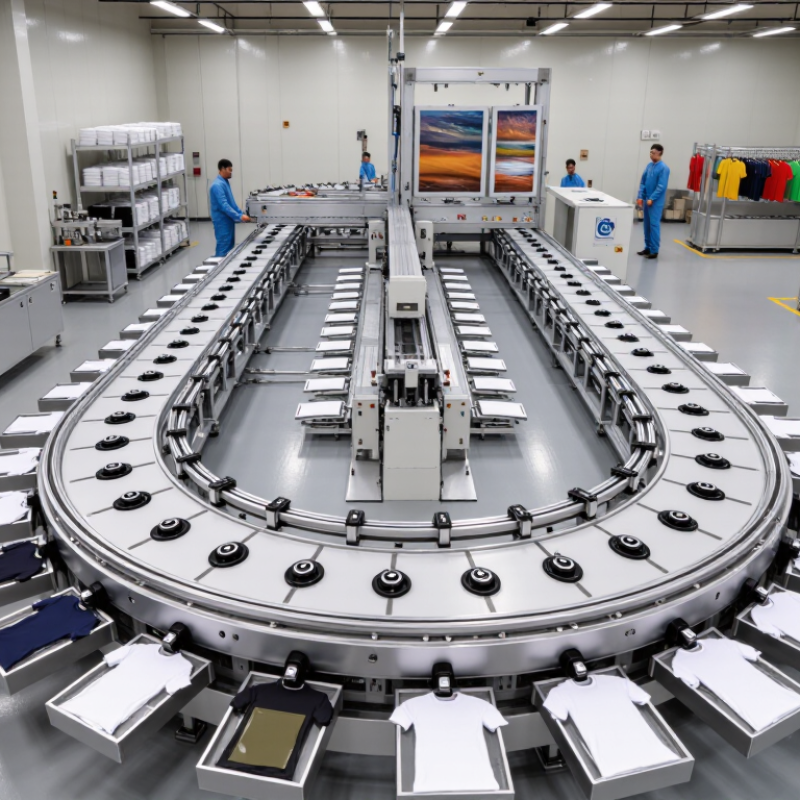
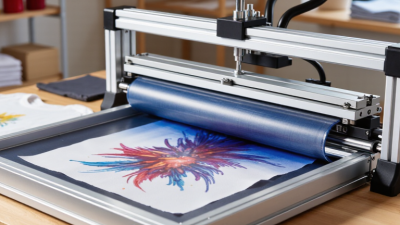
An oval screen printing machine moves T-shirts between printing and curing stations along an elongated, closed track. Each shirt sits on a flat pallet that supports the fabric throughout the cycle. Screens transfer individual ink colors onto the garment through mesh openings. Squeegees control ink deposition. Flash units partially cure selected layers before another color is applied. Registration matters. Even slight misalignment can leave visible edges around small lettering or detailed artwork.
The oval layout accommodates multiple stations along two straight sections connected by curved ends. Depending on its configuration, a machine can support loading, printing, flashing, cooling, and unloading within one production cycle. That flexibility helps when printing a white underbase beneath colored artwork on dark T-shirts. Fabric matters, too. Textile Exchange’s Materials Market Report 2024 puts global fiber production at approximately 124 million tonnes in 2023. Cotton accounted for around 24.4 million tonnes, highlighting its continued relevance when evaluating garment-printing equipment. However, those figures describe fiber production, not demand for oval presses.
For a 2026 equipment shortlist, assess usable print area, pallet dimensions, registration adjustment, and available curing space. Ask for a trial using your actual shirts and artwork. Check fine lines, solid ink coverage, and alignment after repeated cycles. An oval press may offer expansion opportunities, but additional stations also require floor space and operator attention. Advertised output deserves scrutiny. A production estimate should account for loading speed, flash settings, ink behavior, and rejected garments.
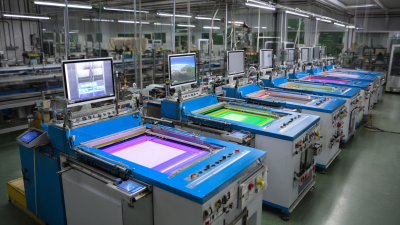
An oval screen printing machine moves garment platens around an elongated closed-loop track, indexing them through screen printing and supporting process stations. The best configuration depends on the artwork, production volume, available floor space, and curing requirements.
| Evaluation Dimension | Technical Facts | Effect on T-Shirt Production | What to Verify Before Buying |
|---|---|---|---|
| Machine Layout | Garment platens circulate around an elongated loop. Printing, flashing, and handling operations occupy positions along the track. | The layout allows multiple process positions to be arranged along the machine, but requires a suitable production-floor layout. | Check installed dimensions, operator access, maintenance clearances, and the route to the final curing equipment. |
| Printing Method | A squeegee pushes ink through open areas of a stenciled mesh screen onto the garment. | Repeat production requires prepared screens, ink setup, registration, and cleanup. | Evaluate screen preparation capacity, compatible screen frames, and the time required to change jobs. |
| Color Capacity | Each separately printed ink color normally requires its own screen. Underbases and highlight whites can require additional screens. | The number of artwork colors alone may understate the number of print heads needed for a job. | Count every planned ink layer and confirm the available print heads for the intended production sequence. |
| Stations and Print Heads | Total stations and print heads are different specifications. Stations can support loading, unloading, flashing, cooling, or printing. | A machine with more stations does not necessarily print more colors. | Request a station-by-station layout showing print heads, flash units, cooling positions, and garment handling areas. |
| Maximum Print Area | Usable print size depends on the print head, screen frame, squeegee travel, and platen dimensions. | A machine must accommodate both the artwork dimensions and the garment size without interfering with seams or fixtures. | Confirm usable print width and length with the exact platen and screen combination intended for production. |
| Fabric and Ink Compatibility | Cotton, polyester, and blended fabrics require suitable inks and curing conditions. Some polyester fabrics are susceptible to dye migration. | Fabric selection affects ink choice, underbase requirements, flash settings, and final curing conditions. | Test representative garments for opacity, adhesion, dye migration, and wash durability using the intended ink system. |
| Flash and Cooling Positions | Flash units partially dry or gel an ink layer between print steps. Cooling positions may be needed before subsequent printing. | Flash and cooling requirements influence the process layout and can limit the production cycle. | Check flash coverage, heat control, available cooling positions, and performance on the most demanding planned job. |
| Final Curing | Ink must meet its specified curing conditions. A separate conveyor dryer commonly performs final curing after unloading. | Incomplete curing can cause poor wash durability or adhesion, even when the print initially looks acceptable. | Match dryer capacity to press output and verify curing using the ink supplier's specified procedure. |
| Production Speed | Actual output depends on indexing time, print strokes, flash duration, garment handling, and production interruptions. | Advertised maximum speed may differ from sustained output on a specific multicolor design. | Request a timed production trial with representative artwork, garments, ink, and staffing. Record saleable shirts per hour. |
| Registration | Multicolor printing requires consistent alignment between screens and garment platens. | Registration consistency affects fine detail, underbase coverage, edge definition, and reject rates. | Inspect sample prints from multiple platens and repeated cycles, including after the machine reaches operating temperature. |
| Garment Handling | Garments must be positioned consistently and held securely on suitable platens throughout the printing sequence. | Loading accuracy and fabric movement affect placement consistency and usable output. | Test the intended garment sizes, platen shapes, hold-down method, and loading and unloading workflow. |
| Utilities and Installation | Electrical supply, compressed-air requirements, and ventilation needs depend on the machine and connected equipment. | Site preparation and utility capacity affect installation cost and reliable operation. | Obtain equipment-specific requirements for voltage, phase, power, air pressure, air consumption, and ventilation. |
| Expansion Options | Some oval systems offer modular expansion. Additional stations or print heads are subject to the machine's design and controls. | Future capacity depends on the actual expansion options supported by the selected configuration. | Confirm supported additions, required floor space, control-system compatibility, and installation costs in writing. |
| Best Production Fit | Automatic screen printing spreads screen preparation and setup costs across the production run. | Repeat orders and longer runs can make setup time a smaller share of the total production time. | Compare total job cost using typical order quantities, setup time, labor, consumables, maintenance, and expected saleable output. |
Selection note: This table presents general technical facts and evaluation criteria for 2026 purchasing decisions. It does not rank individual machines. Color capacity, station count, print area, speed, utility requirements, and expansion options vary by configuration and should be verified against current technical documentation and a representative production trial.