2025 Top 10 Clothing Printing Machines You Should Consider for Your Business
In the rapidly evolving landscape of apparel production, investing in the right Clothing Printing Machine can significantly impact a business's efficiency and creativity. According to a recent report by Smith & Associates, the global digital textile printing market is expected to reach $5.3 billion by 2025, driven by the increasing demand for customized and on-demand printing solutions. This growth highlights the critical importance of integrating advanced printing technologies into clothing manufacturing processes.
"To stay competitive in today’s market, businesses must leverage the innovations in clothing printing machines to meet consumer demands for personalization and quality," says industry expert Dr. Emily Chen, a leading authority in textile manufacturing. This statement underscores the necessity for shop owners and manufacturers to carefully consider their options, ensuring they choose the best equipment that aligns with their operational goals. With a plethora of machines available, our exploration of the top ten Clothing Printing Machines for 2025 will provide invaluable insights and tips tailored to enhance productivity and creativity in your business efforts.
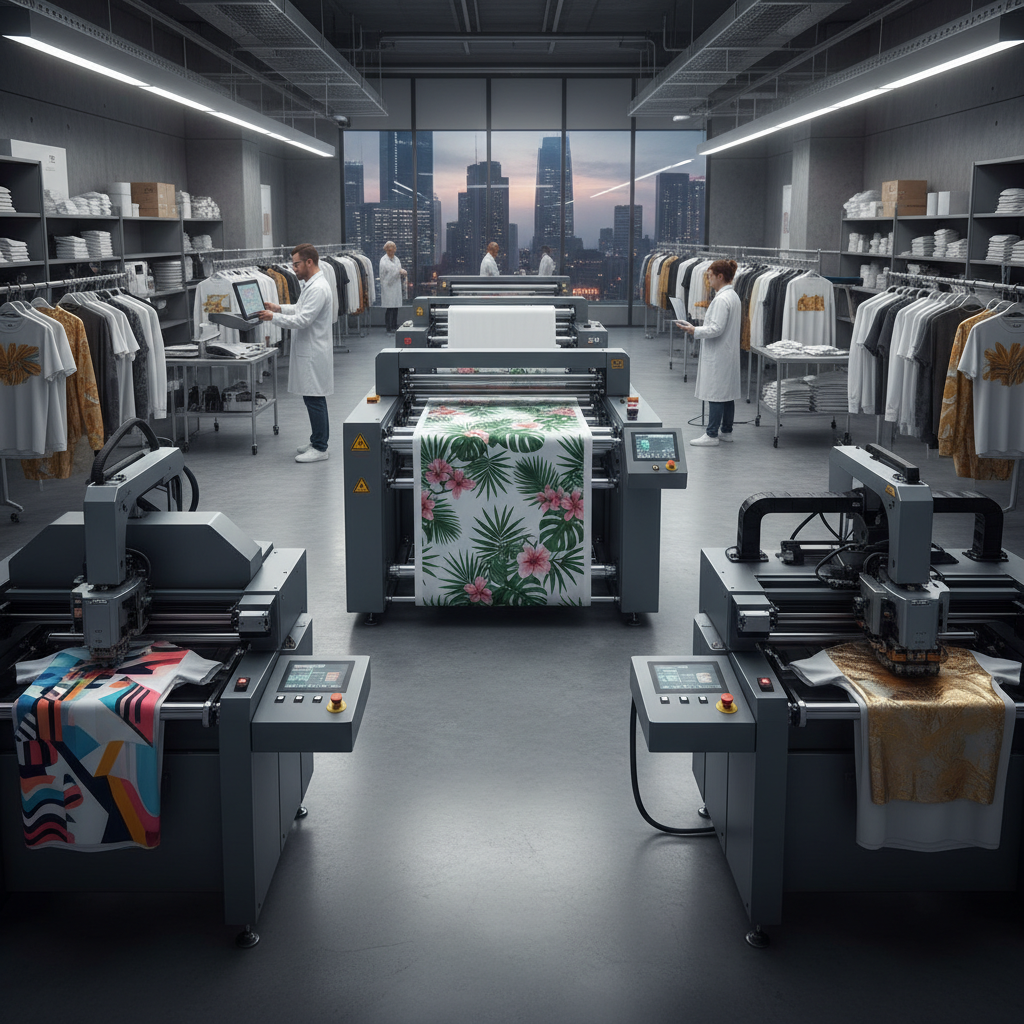
Emerging Trends in Clothing Printing Machines for 2025 and Beyond
As we look ahead to 2025 and beyond, the clothing printing industry is set to undergo significant transformations driven by emerging technology trends. One of the most notable shifts is the increasing integration of artificial intelligence (AI) in printing machines, enhancing operational efficiency and customization capabilities. Reports indicate that AI can improve production times by up to 30%, allowing businesses to meet the growing demand for personalized apparel. This adaptation not only streamlines workflows but also helps brands respond more agilely to changing market trends.
Furthermore, sustainability remains at the forefront of industry developments. Emerging fabric innovations are leading to the creation of eco-friendly materials, which, in conjunction with advanced printing technologies, are minimizing waste and energy consumption. For example, recent studies suggest that sustainable printing methods can reduce water usage by 50% compared to traditional techniques. This shift towards environmental sustainability aligns with the core values of modern consumers, who increasingly favor brands that prioritize ethical practices. Ultimately, the convergence of AI and sustainable innovations will shape the future landscape of clothing printing, offering unparalleled opportunities for growth and differentiation in a competitive marketplace.
Key Features to Look for in Top Clothing Printing Machines
When selecting a clothing printing machine for your business, several key features should be at the forefront of your decision-making process. First and foremost, print quality is paramount. A machine that delivers vibrant colors and sharp details will not only enhance your products but also boost customer satisfaction. Look for models that utilize advanced printing technologies, such as eco-solvent or UV printing, which can produce high-resolution prints on a variety of fabrics.
Another critical consideration is the machine's production speed and efficiency. In today’s fast-paced market, the ability to quickly fulfill large orders can set your business apart. Machines that offer automated cleaning and maintenance features can significantly reduce downtime and increase overall productivity. Additionally, the versatility of the machine is essential; it should be capable of handling different garment types, from t-shirts to activewear. Assessing these features will ensure that your investment aligns with your business needs and growth objectives.
2025 Top 10 Clothing Printing Machines You Should Consider for Your Business
| Machine Model |
Printing Method |
Max Print Size (cm) |
Print Speed (m²/hr) |
Key Features |
| Model A |
DTG |
40 x 60 |
25 |
High resolution, eco-friendly inks |
| Model B |
Screen Printing |
50 x 70 |
200 |
Versatile, large volume production |
| Model C |
Sublimation |
60 x 90 |
45 |
Bright colors, durable prints |
| Model D |
Vinyl Cutting |
100 x 300 |
30 |
Precision cutting, easy to use |
| Model E |
Hybrid |
40 x 80 |
50 |
Dual capabilities, efficient |
| Model F |
Heat Transfer |
30 x 60 |
20 |
Affordable, quick setup |
| Model G |
Direct-to-Film |
40 x 50 |
35 |
Versatile fabrics, high quality |
| Model H |
Embroidery |
30 x 40 |
10 |
Durable designs, high detail |
| Model I |
Spray Printing |
60 x 60 |
15 |
Innovative patterns, unique styles |
| Model J |
3D Printing |
50 x 50 |
8 |
Unique textures, high impact |
Comparison of Printing Technologies: Digital vs. Screen Printing
The comparison of printing technologies is crucial for businesses looking to invest in clothing printing machines. Digital printing offers the advantage of speed and flexibility, allowing for intricate designs and customizations without the need for extensive setup. This technology is particularly appealing in the context of a growing Packaging Printing Market, which is projected to reach USD 433.4 billion by 2026. The ability to produce unique designs on demand can help businesses capitalize on market trends, reducing inventory risks associated with traditional methods.
On the other hand, screen printing remains a dominant force due to its cost-effectiveness for large runs and vibrant colors. While it requires more time and setup, the durability and print quality are often unmatched for bulk orders. As the technology continues to evolve, companies must weigh the benefits of both digital and screen printing to determine the best fit for their operations. Innovations in both fields are driving trends, making it essential to stay informed about the latest equipment and techniques to meet consumer demands effectively.
Market Growth Projections for the Clothing Printing Industry in 2025
The clothing printing industry is on an upward trajectory, with market growth projections indicating a significant increase in demand. By 2025, this sector is expected to witness unprecedented expansion, driven by advancements in printing technology and customization trends. Industry reports suggest that the global market for clothing printing is set to thrive, with businesses recognizing the profitability of offering personalized apparel solutions. A surge in e-commerce and sustainable fashion initiatives also plays a critical role in shaping market dynamics.
To navigate this booming landscape, leveraging the right printing machinery is essential. Those looking to invest should pay attention to the projected growth of the packaging printing market, which is anticipated to reach USD 433.4 billion by 2026. This booming demand signifies an overarching trend towards integrated printing solutions that accommodate both clothing and packaging needs.
**Tip**: When selecting a clothing printing machine, prioritize versatility and scalability to adapt to changing market requirements.
**Tip**: Consider eco-friendly printing options; as sustainability becomes central to consumer preferences, investing in greener technologies can enhance your brand’s appeal and market position.
With these insights, businesses can better prepare for the opportunities presented by the evolving clothing printing landscape.
Sustainability in Clothing Printing: Eco-Friendly Machine Options
In the ever-evolving landscape of clothing printing, sustainability has become a paramount consideration for businesses looking to reduce their environmental footprint. According to a report by Smithers, the global market for eco-friendly printing technologies is projected to reach $10 billion by 2025, as more companies adopt green practices. This shift emphasizes the importance of investing in machines that not only deliver high-quality prints but also adhere to sustainable standards.
When choosing a clothing printing machine, consider options that utilize water-based inks and energy-efficient designs. For instance, Direct-to-Garment (DTG) printers with eco-friendly certifications have shown to decrease water consumption by up to 90% compared to traditional methods. Implementing these technologies can not only enhance your brand’s reputation but can also attract environmentally conscious consumers, a market that is growing rapidly, with nearly 64% of buyers willing to pay more for sustainable products according to Nielsen.
Tips: To further enhance sustainability, regularly maintain your printing equipment to ensure optimal functionality, thereby minimizing waste. Additionally, explore partnerships with suppliers who prioritize sustainable practices in their manufacturing processes, as this can amplify your eco-friendly efforts. By leveraging these strategies, your business can lead the charge towards a greener, more responsible clothing printing industry.
2025 Top 10 Clothing Printing Machines Sustainability Comparison