How to Choose the Best Silk Screen Printing Machine for Your Needs?
Choosing the right Silk Screen Printing Machine can significantly influence your printing success. Industry expert Jane Doe states, "A quality machine makes all the difference in print precision." With numerous options available, understanding what features matter most is crucial.
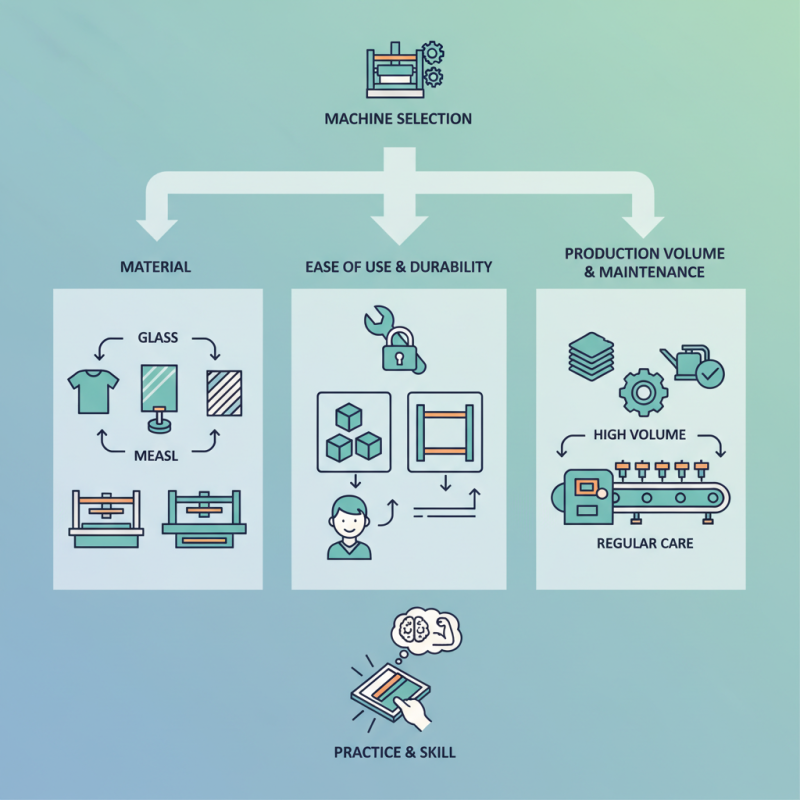
When selecting a Silk Screen Printing Machine, consider your specific needs. Are you printing on fabric, glass, or metal? Each material may require different equipment. Look into the machine's durability and ease of use. A complicated setup can deter beginners.
Additionally, think about your production volume. High-volume printing may demand advanced features and speed. Users often overlook maintenance. Regular care extends a machine's life and ensures consistent quality. Remember, even with the best tools, mastering the technique takes practice.
Understanding Silk Screen Printing and Its Applications
Silk screen printing is a versatile technique widely used in various applications. It involves creating a design by pushing ink through a mesh screen. This method is ideal for producing vibrant, long-lasting images on a range of materials. Common applications include T-shirts, posters, and signage. Many industries, including fashion and advertising, rely on this printing technique for its durability and color richness.
A significant advantage of silk screen printing is its ability to handle large runs effectively. It achieves consistent results, making it a preferred choice for businesses. However, achieving high-quality results requires skill and practice. One common challenge is mastering the ink consistency. Too thick or too thin inks can lead to unsatisfactory prints. Regular experimentation and adjustments are essential to perfect the process.
Additionally, equipment choices can impact the outcome. Beginners may struggle with more complex setups. A simple machine may suffice for personal projects, but commercial needs often demand advanced features. Evaluating both your current needs and future ambitions is crucial. Reflecting on past experiences with print projects can provide valuable insights into what equipment will serve you best.
Silk Screen Printing Machine Comparison
Key Factors to Consider When Choosing a Printing Machine
When choosing a silk screen printing machine, several key factors come into play. First, consider the production volume. Reports indicate that 60% of businesses find scalability essential. A machine that accommodates both small and large runs can optimize efficiency. The speed of the printing process Matters too. Many models can print up to 1,000 pieces per hour, but slower machines may offer more quality control.
Another crucial aspect is the complexity of the designs. If intricate patterns are common, select a machine capable of detailed prints. Research shows that 75% of customers prioritize design accuracy. This often requires advanced features like adjustable squeegee pressure. Elevating flexibility in thickness and detail can also help maintain quality during high-volume production runs.
Budget plays a significant role as well. A machine might seem affordable up front but consider long-term operating costs. Maintenance and ink expenses can quickly add up. Some operators overlook these costs, leading to unexpected financial strain. Thus, evaluate total cost of ownership versus initial expenditure for a more accurate assessment.
Evaluating Features and Specifications for Your Printing Needs
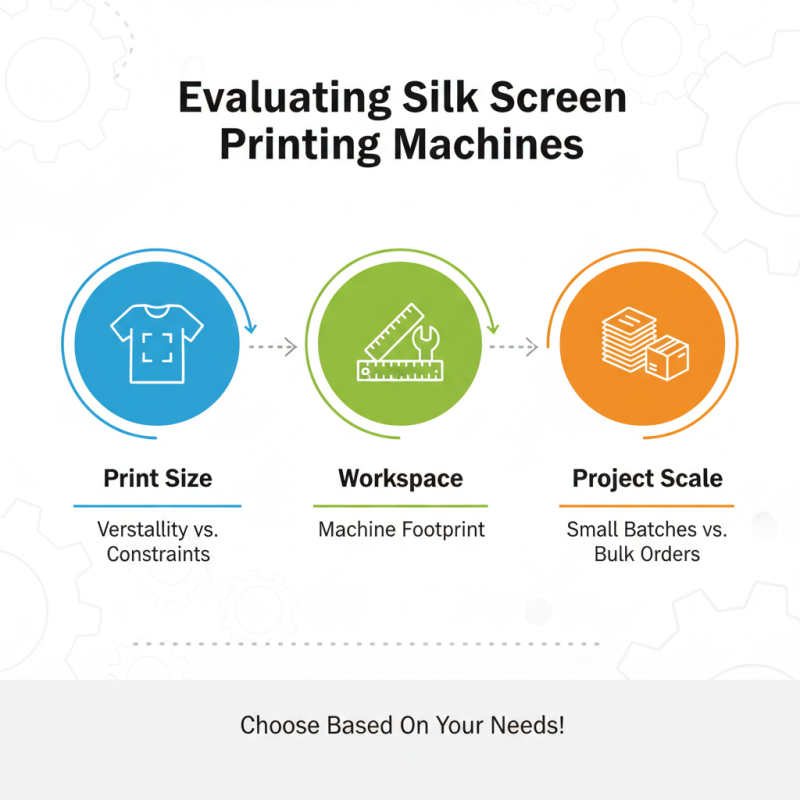
When selecting a silk screen printing machine, understanding essential features is crucial. Focus on the print size you need. A larger print area may increase versatility. However, consider space constraints in your workshop. Smaller machines can be effective for limited projects, yet may fall short for larger orders.
Look at the ease of use. Some machines feature user-friendly interfaces. Others are more complex, requiring experience to operate effectively. Think about your skill level. If you are a beginner, a simpler model could save time and frustration. Check customer reviews for real-user experiences. Some machines may perform poorly under heavy use, leading to dissatisfaction.
Evaluate durability and build quality. A robust machine can handle frequent usage, while cheaper models may wear out quickly. Metal frames often offer better stability than plastic ones. Reflect on your long-term needs. Investing in a reliable machine is essential for consistent quality. Remember, not all features may be necessary for your specific projects. Prioritize what truly matters for your work.
Budgeting and Cost Considerations for Silk Screen Printing Equipment
When choosing a silk screen printing machine, budgeting is crucial. The initial investment can range widely. Basic setups start around $1,000, while high-end models can exceed $10,000. Consider ongoing costs such as inks, screens, and maintenance. According to a report by IBISWorld, the screen printing industry has been growing at an annual rate of 3.2%. This indicates a robust market, but also competitive pricing pressures.
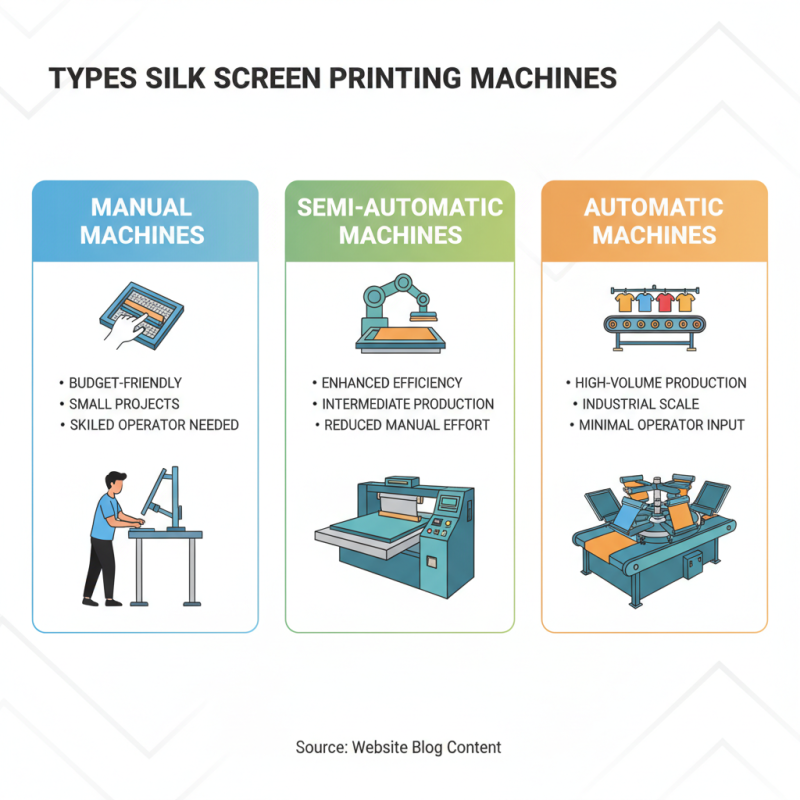
Tips: Assess your printing volume. If production is low, a semi-automatic machine may suffice. High production demands a fully automatic machine. Factor in your workspace and energy costs. A compact machine might save space but can limit output.
Evaluate the total cost of ownership. Hidden expenses, like supplies and repairs, can accumulate. Research indicates that after-sales service plays a critical role in long-term satisfaction. Manufacturers with a solid support network might save you money and frustration. Always align your choice with your business goals for effective resource allocation.
How to Choose the Best Silk Screen Printing Machine for Your Needs? - Budgeting and Cost Considerations for Silk Screen Printing Equipment
| Machine Type |
Price Range |
Print Area Size |
Max Number of Colors |
Recommended For |
| Manual Press |
$200 - $800 |
Up to 20" x 24" |
1-4 Colors |
Hobbyists, Small Businesses |
| Semi-Automatic Press |
$1,000 - $5,000 |
Up to 24" x 36" |
4-6 Colors |
Medium-Sized Businesses |
| Automatic Press |
$5,000 - $20,000 |
Up to 50" x 72" |
8+ Colors |
Large-Scale Production |
| DIY Screen Printing Kits |
$100 - $500 |
Varies |
1-2 Colors |
Beginners, Home Use |