Best Automatic Printing Machine for Global Buyers in 2026?
As the demand for efficient manufacturing continues to rise, the Automatic Printing Machine market is expanding rapidly. According to a recent report by Market Research Future, the global automatic printing machine industry is expected to reach a valuation of over $3 billion by 2026. This growth highlights an increasing reliance on automation in printing processes across various sectors.
Industry expert Dr. Sylvia Chen, a leading authority in manufacturing technology, notes, "The integration of automatic printing machines enhances productivity and reduces operational costs." Her insights reflect a broader trend where manufacturers prioritize efficiency and speed. However, choosing the best automatic printing machine remains a challenging task for global buyers. The landscape is filled with numerous options, each offering different capabilities and technologies.
While advancements in automatic printing machines are remarkable, not all products meet expectations. Some models may underperform in durability or output quality. It’s essential for buyers to conduct thorough research and consider both performance and reliability when making their choice. Investing time in understanding the market can lead to more informed decisions and ultimately, greater satisfaction with their purchases.
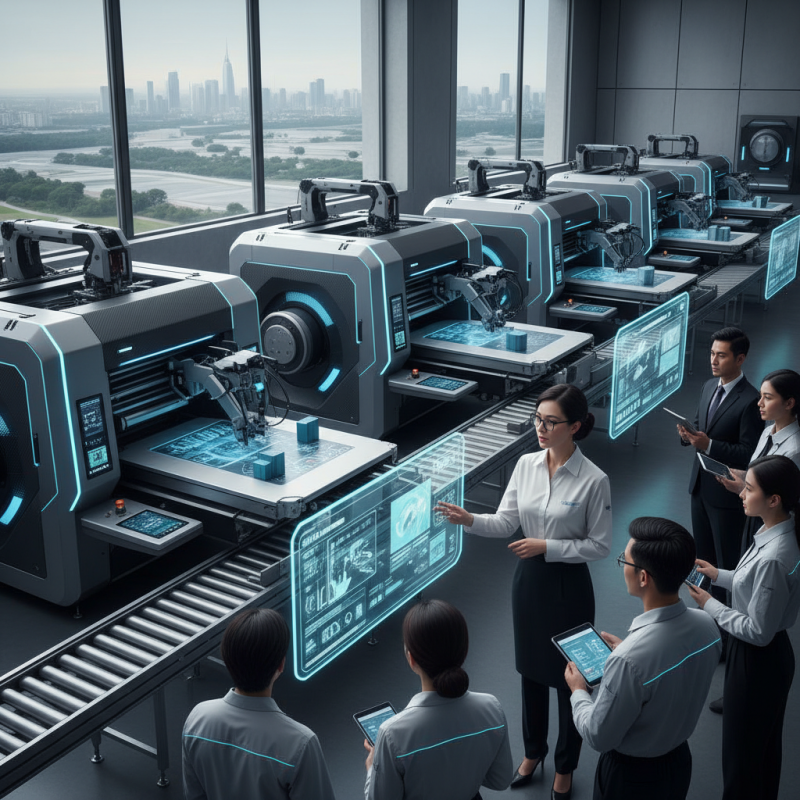
Best Automatic Printing Machine: Overview of Market Trends in 2026
The market for automatic printing machines is evolving rapidly. In 2026, trends indicate a shift toward more efficient and versatile machines. According to a recent report by industry analysts, the demand for high-speed printers is expected to grow by 15% annually. This growth is driven by the increasing need for faster production rates in various sectors, including packaging and textiles. The integration of smart technology into printing machines will also enhance efficiency, allowing for remote monitoring and management.
Sustainability is another crucial factor shaping market trends. Many manufacturers are focusing on eco-friendly practices. Reports show that 45% of buyers prioritize machines that use less energy. This shift reflects a broader commitment to reducing carbon footprints. Yet, some buyers express concerns about the initial investment costs associated with such technology. The balance between cost and sustainability is an ongoing challenge. As the industry evolves, continuous feedback and adaptation will be key for both buyers and manufacturers.
Key Features and Specifications for Top Printing Machines in 2026
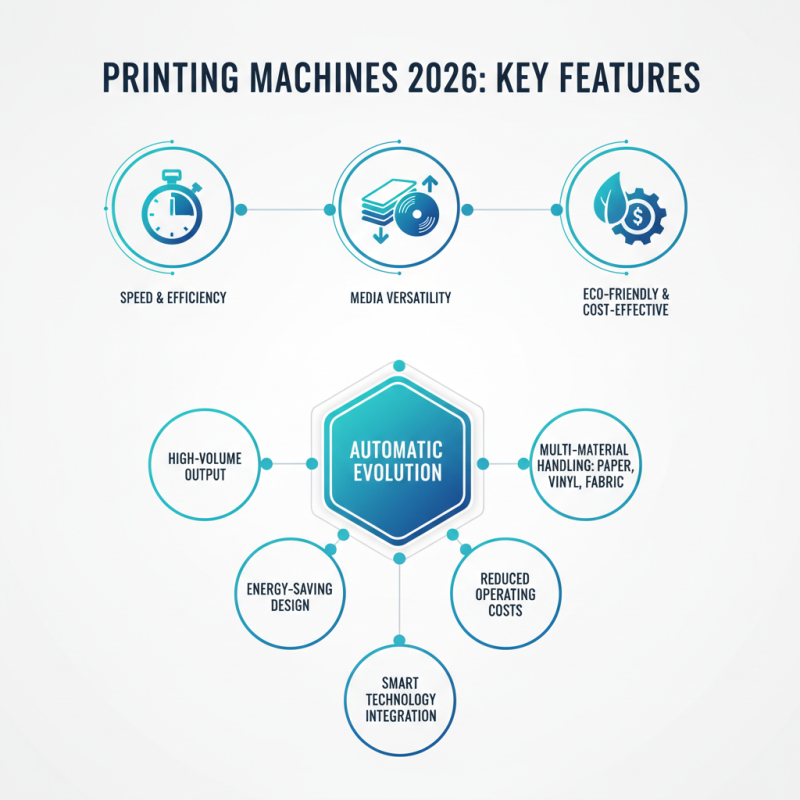
In 2026, the landscape of automatic printing machines is evolving. Key features such as speed, efficiency, and versatility will dominate buyer preferences. Modern machines will focus on energy-saving designs, ensuring they are both eco-friendly and cost-effective. The ability to handle various media types, including paper, vinyl, and fabric, will be crucial for diverse applications.
When considering specifications, look for machines with high resolution. A minimum of 1200 DPI will provide the detail needed for quality prints. Furthermore, automated features that allow for easy setup and operation will enhance productivity. Many users seek machines that support connectivity options like Wi-Fi and Bluetooth for seamless integration with other devices.
Tips: Assess the machine's maintenance requirements. Some models demand more upkeep than others. It's essential to evaluate if you can manage these tasks efficiently. Also, consider the learning curve associated with new machines. User-friendly interfaces are vital for quick adaptation. Balancing performance and usability will help avoid any operational headaches down the line.
Leading Brands and Their Market Share in the Automatic Printing Sector
The automatic printing machine market is evolving rapidly. Various brands claim superiority in efficiency and output quality. Each offers unique features tailored for different user needs. Understanding these can be challenging for buyers. Market share indicates which brands dominate, yet it doesn't always reflect actual user satisfaction.
Several key players lead the sector. Their technologies vary significantly, impacting precision and speed. Some prioritize eco-friendliness, while others focus on scalability. Not all brands meet the expected standards, leading to mixed reviews. Buyers often struggle to find a balance between price and performance, highlighting the need for thorough research.
Customer feedback reveals a gap between expectation and reality. Some machines underperform compared to their marketing claims. Users frequently report issues with setup and maintenance. Reliable information is crucial for informed decisions. As the market grows, understanding the nuances will help buyers choose machines that truly meet their printing needs.
Technological Innovations Impacting Automatic Printing Machines in 2026
As we approach 2026, automatic printing machines are set to undergo significant transformations due to technological innovations. The integration of AI and machine learning is reshaping how these machines operate. Predictive maintenance is a prime example. It minimizes downtime by anticipating failures based on real-time data analysis. According to a report by Smithers Pira, predictive maintenance can reduce overall costs by up to 30%. The potential for higher efficiency is substantial, yet it raises questions about dependency on technology and the skills gap in the workforce.
Moreover, advancements in materials are pivotal. The use of eco-friendly inks and substrates is gaining traction. A recent study highlighted that 60% of buyers prioritize sustainability in their printing choices. This shift not only meets regulatory demands but also cultivates brand loyalty among environmentally conscious consumers. However, the challenge remains: how to balance between traditional materials and these new options while maintaining quality.
Another technological trend is the rise of automation in setup processes. Fully automated setups are becoming standard, enhancing speed and precision. As reported by MarketsandMarkets, the market for automated printing solutions is projected to grow by 10% annually. Yet, this innovation prompts a need for continuous training programs. Companies must invest in workforce development to avoid losing relevance in a rapidly evolving market. The path forward in automatic printing machines is complex and demands careful navigation.
Best Automatic Printing Machine for Global Buyers in 2026
| Feature |
Details |
| Printing Speed |
Up to 200 pages per minute |
| Print Technology |
Digital Inkjet and Laser |
| Media Size |
Up to A3 and large format |
| Resolution |
1200 x 1200 DPI |
| Connectivity Options |
USB, Ethernet, Wi-Fi |
| Automatic Features |
Auto Document Feeder, Duplex Printing |
| Market Availability |
Global distribution by 2026 |
| Estimated Price Range |
$5,000 - $15,000 |
Cost Analysis and ROI for Automatic Printing Machines in Global Markets
The automatic printing machine market is evolving rapidly. By 2026, demand for these machines is projected to grow significantly, driven by increased automation and efficiency in production. Reports indicate that the global automatic printing machine market is expected to reach $4.5 billion, growing at a CAGR of around 7% from 2023 to 2026. This growth brings opportunities, but also challenges, especially in terms of cost management and return on investment (ROI).
When analyzing costs, businesses must consider initial investment and operational expenses. Typically, high-quality machines can cost upwards of $50,000. However, productivity gains can offer substantial savings over time. A well-implemented automatic printing solution can reduce labor costs by up to 30%. Moreover, improved precision leads to less waste, enhancing profitability. Evaluating potential ROI is essential. A machine that cuts production time can lead to a breakeven point within 18 months.
**Tip:** Always assess the total cost of ownership. Consider maintenance, training, and energy use in your calculations.
As technology progresses, it is crucial to remain vigilant about capabilities. Some machines may underperform based on user needs. Choosing the wrong model can lead to costly downtimes and inefficiencies. Researching specific use cases and industry benchmarks can help make informed decisions that align with business goals.
**Tip:** Engaging with industry experts can provide insights into reliable models. Don’t overlook the importance of peer reviews.
Best Automatic Printing Machines: Cost Analysis and ROI for 2026